
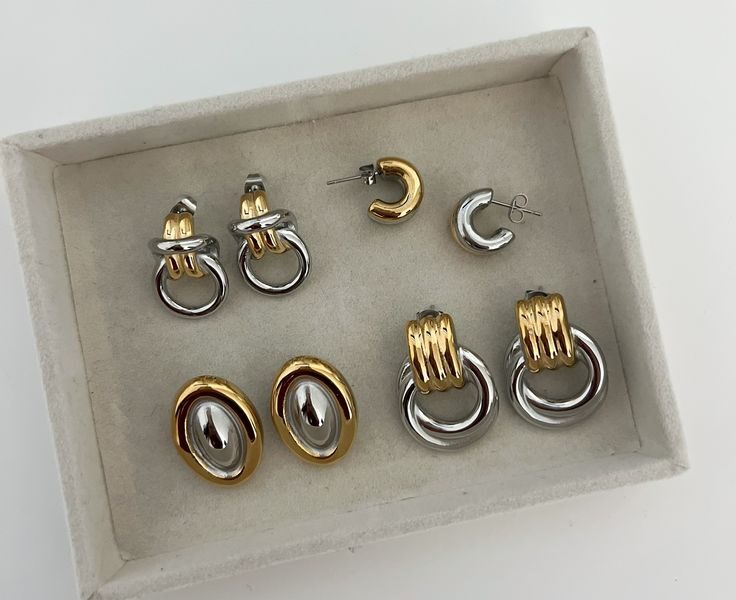
Choosing between silver and gold jewelry can feel like a simple style preference, until you notice that one metal seems to brighten your face while the other looks slightly off, even when both pieces are beautiful. That difference is often not about the jewelry itself, and it is not really about whether your skin is light, dark, oily, dry, or sensitive either. More often, it comes down to your skin undertone.
Your undertone is the natural tone underneath your skin, and unlike your actual skin color, it tends to stay relatively consistent even when you get darker, get lighter, or deal with changes in your complexion. Understanding it can make choosing jewelry much easier because certain metals naturally harmonize with certain undertones, making the skin look fresher, brighter, and more balanced.
First, your undertone is not your skin color
This is the part that often causes confusion.
You can have very dark skin and a cool undertone. You can have fair skin and a warm undertone. You can also fall somewhere in the middle with a neutral undertone.
Your skin color describes how light or deep your complexion is, while your undertone describes the subtle warmth, coolness, or neutrality beneath it. The two are related, but they are not the same thing.
The same applies to skin type. Whether your skin is oily, dry, combination, or sensitive has nothing to do with whether silver or gold will suit you better.
When people say, “Gold looks better on dark skin” or “Silver is for fair skin,” they are simplifying something that is much more personal. What matters more is the undertone beneath your complexion, not the depth of the complexion itself.
So, how do you know your undertone?
There are three broad categories: warm, cool, and neutral.
A warm undertone usually has a golden, yellow, peach or slightly greenish tone underneath the skin. A cool undertone often has pink, red or slightly blue tones, while a neutral undertone sits somewhere in the middle and does not look strongly warm or cool.
You do not need to overanalyze it, but a few simple clues can help.
One of the easiest places to start is with your veins. Look at the veins around your wrist in natural light. If they appear more green, you may have a warm undertone. If they look blue or pinky, you may lean cool. If you cannot quite tell, or they seem like a mix, you may be neutral.
You can also think about how your skin reacts to the sun. Warm undertones often tan more easily, while cool undertones may burn or redden more quickly. This is not a perfect test on its own, but it can add another clue.
Another useful trick is to hold a crisp white fabric and then a cream or ivory fabric near your face. Cool undertones often look clearer against bright white, while warm undertones tend to glow more against cream, beige, or ivory. If both look equally flattering, you may have a neutral undertone.
The most useful test, however, may be the jewelry itself. Try on a simple silver piece and then a simple gold one, preferably near your face. Look at your skin rather than the jewelry. Which one makes your complexion look more alive? Which one seems to blend naturally rather than sitting on top of the skin?
Sometimes the answer is clearer than you expect.
If you have a warm undertone, gold often feels more natural
Gold has a natural warmth to it, which tends to complement skin with golden, yellow, peach, or olive undertones.
Yellow gold can look especially beautiful because it echoes the warmth already present in the skin, creating a rich and effortless effect. Rose gold can also work beautifully, particularly on warm-neutral skin, because it brings softness without feeling too cool.
This does not mean someone with a warm undertone can never wear silver. It simply means gold may create a more seamless look, especially if you want your jewelry to enhance your complexion rather than stand out sharply against it.
If you have ever put on a gold earring or necklace and immediately felt that your skin looked brighter, there is a good chance your undertone is helping create that effect.
If you have a cool undertone, silver may make your skin look clearer
Silver, white gold, and platinum tend to sit beautifully against cool undertones because their cooler finish echoes the blue, pink, or rosy tones beneath the skin.
The result can look crisp, elegant, and very clean.
Some people notice that yellow gold makes their skin look slightly dull or too yellow, while silver seems to lift the complexion. That does not mean gold is unattractive on them; it simply means cooler metals may harmonize more naturally with their undertone.
If your wardrobe also leans toward black, white, navy, grey, jewel tones, or cool pastels, silver may already fit beautifully into the colors you naturally wear.
If you are neutral, you may be able to wear both
Neutral undertones are often the easiest when it comes to jewelry because both warm and cool metals can work well.
Gold may feel warmer and richer, while silver may look cleaner and more modern, but neither one necessarily fights with the skin.
This is where personal style becomes even more important.
You may prefer gold because it feels softer and more classic, or silver because it looks minimal and contemporary. You can also mix both metals without worrying too much about whether one is technically “better.”
In fact, mixed-metal jewelry can look especially beautiful on neutral undertones because the skin can carry both without one looking out of place.
Greenish undertones can be a little harder to place
Skin with a slightly greenish undertone does not always fit neatly into the usual warm-versus-cool conversation.
Some greenish undertones lean warm and look stunning in yellow gold, while others have a cooler or more muted quality and can carry silver just as well. This is why vein tests alone are not always enough, especially because the veins can sometimes appear both green and blue.
If you notice a slightly greenish tone underneath your skin, try comparing the metals directly against your face in daylight. You may find that one looks richer, or you may realize that both work but create different moods.
That is perfectly fine.
Undertone is meant to guide you, not box you in.
Your wardrobe can help you decide too
Jewelry does not sit on the skin in isolation. It also interacts with the colors you wear most often.
If your wardrobe is full of cream, camel, rust, chocolate brown, olive, mustard, terracotta, and warm neutrals, gold jewelry will often blend into that palette beautifully.
If you wear a lot of black, white, grey, navy, cobalt, emerald, berry tones, or icy pastels, silver may feel more natural.
For a wardrobe filled with both, mixed metals may make the most sense because they give you more flexibility.
This is also why some women feel that gold looks better on them in certain outfits while silver works better with others. Sometimes the outfit changes the balance.
Do not ignore the finish of the metal
The conversation is not only about gold versus silver.
A very bright, highly polished yellow gold can feel completely different from brushed gold, champagne gold, or antique gold. The same applies to silver, which can range from highly reflective to soft, oxidized, or matte.
If you think gold is “too much” on you, you may simply prefer a softer finish. If silver feels too stark, you may like white gold or a warmer-toned silver instead.
Sometimes the answer is not changing metals entirely, but choosing a version that sits more naturally with your complexion and style.
And yes, personal preference still matters
Knowing your undertone is useful, but it is not a rulebook.
If you have a cool undertone and love yellow gold, wear yellow gold. If your skin leans warm and you feel most like yourself in silver, that matters more than any styling theory.
Fashion should help you understand what works for you, not make you feel restricted by formulas.
Undertone simply gives you a starting point. It explains why one metal may make your skin glow while another creates more contrast, but your own taste decides which effect you prefer.
Some women love harmony, while others love contrast.
Both can look beautiful.
The easiest way to know? Look at your face, not the jewelry
The next time you cannot decide between silver and gold, try both in natural light and pay attention to what happens to your complexion.
Does one make your skin look clearer? Does one bring warmth to your face? Does one seem to brighten your eyes or make your overall look feel more complete?
That is often more useful than following a generic rule based on skin color.
Because choosing the right jewelry is not really about deciding whether silver or gold is more beautiful. Both are.
It is about understanding what makes you look and feel your best.
And once you know your undertone, that