
There was a time when buying groceries meant checking the price, looking at the expiry date and making sure you picked the brand you wanted. Now, it seems we have another responsibility: looking closely enough to be sure the product we are holding is actually what we think it is.
For weeks, people have been sharing concerns about suspected fake products on social media, from popular soft drinks and skincare products to everyday food items we have trusted and bought for years without thinking twice.
People are sharing pictures, comparing packaging and pointing out differences that would ordinarily escape anyone’s attention. And just when you think you have seen enough, another familiar household product becomes the subject of a new conversation.
This week, food content creator Ify of Ify’s Kitchen reportedly shared a discovery that made people look a little more closely at their own kitchen shelves. According to her account, she only recently noticed that a ketchup bottle she had been using carried a name that looked remarkably similar to Heinz, the brand she believed she had purchased.
It is the kind of discovery that makes you want to get up, walk into your kitchen and inspect everything.
And perhaps that is why the conversation has gained so much attention. Many of us have become so familiar with certain brands that we no longer read their names properly. We recognize the colors, the shape of the bottle, the label and the general appearance, then reach for the product without giving it another thought.
But what happens when someone deliberately takes advantage of that familiarity?
When the packaging looks familiar enough to earn your trust
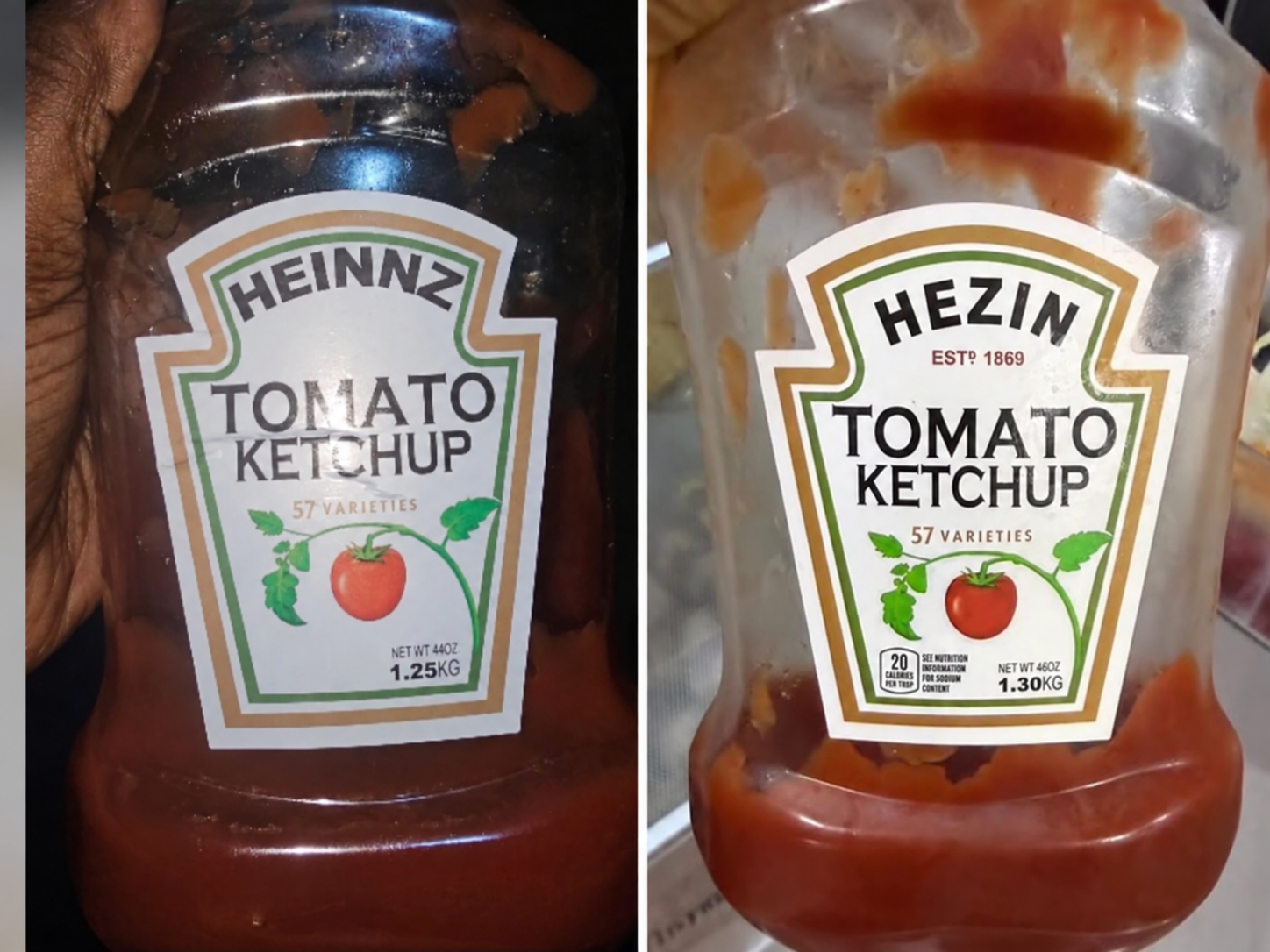
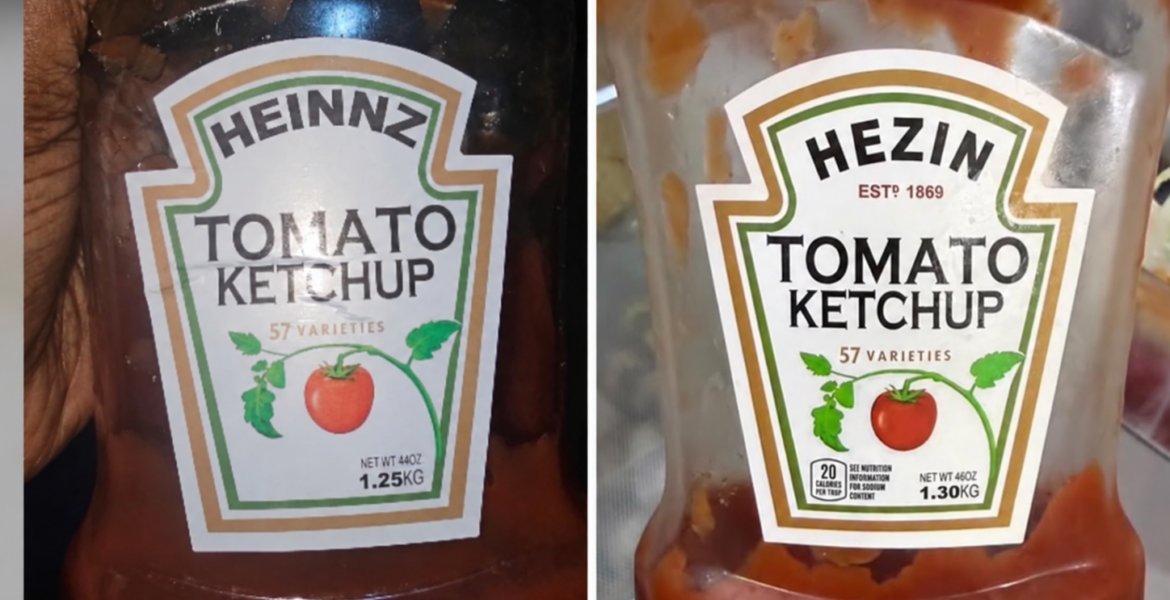
Look closely at the two ketchup bottles pictured here. At a glance, the labels resemble the familiar Heinz design, with its distinctive shape, white background and green and gold borders. But the brand names tell a different story: one reads “HEZIN,” while the other reads “HEINNZ.”
Neither spelling is Heinz.
The images alone cannot establish who manufactured the products, what they contain or whether a regulatory investigation has classified them as counterfeit. However, the similarity in presentation raises an understandable question about how easily a shopper could mistake one product for another.
And this is where the problem becomes particularly uncomfortable. Someone can take time to compare prices, choose what they believe is a familiar brand and even pay more because they trust its quality, only to discover that the name on the packaging is not quite what they thought it was.
It is not difficult to imagine how this happens in a busy supermarket or neighborhood store, especially when you are shopping with children, rushing home after work or simply trying to finish your errands.
Most people do not expect to perform an investigation every time they buy ketchup.
Yet increasingly, consumers are being reminded that recognizing a product is not quite the same thing as verifying it.
The concern goes far beyond ketchup
Think about how many products enter an average home every week.
The soap we use to bathe our children, the body creams we apply to our skin, the drinks we serve guests, the seasoning we add to meals and the toothpaste in our bathrooms.
We buy many of these things because we recognize the brand and have developed a level of trust in it. We assume the manufacturer has followed appropriate standards, that the ingredients are what the label says they are and that somebody has taken responsibility for the product’s safety.
When a product imitates another brand’s appearance or enters the market without proper quality controls, those assumptions become much harder to make.
This is particularly concerning with food and skincare because these are products we either put into our bodies or apply directly to them, sometimes every single day.
NAFDAC has previously warned about counterfeit medicines, cosmetics, beverages and other regulated products entering the Nigerian market through increasingly complex supply chains. The agency has also stressed the need for proper investigation and testing before social media allegations about a particular product are treated as established facts.
The concern, therefore, is not that every unfamiliar product is dangerous or that every difference in packaging signals something sinister. It is that consumers deserve to know who made what they are buying and whether the product meets the standards it claims to meet.
We should not have to become detectives to buy everyday products
One of the most frustrating things about these conversations is how much responsibility eventually falls on the consumer.
We are told to check the spelling, examine the seal, compare the packaging, investigate the registration number, study the ingredients and pay attention to changes in taste, smell or consistency.
These are sensible precautions, but they also reveal how exhausting shopping can become when people begin to question products they once trusted without hesitation.
A mother shopping for her family should be able to buy a familiar food product without wondering whether the manufacturer on the label is real. A woman buying skincare should not have to worry that an imitation product may contain ingredients that damage her skin. And nobody should have to discover a possible problem only after finishing half the bottle.
Consumer vigilance matters, but it cannot replace the responsibility of manufacturers, distributors, retailers and regulators.
There is a reason we have product registration, manufacturing standards and market surveillance in the first place.
The goal should not be to make every shopper an expert in detecting counterfeit goods, but to make it increasingly difficult for unsafe or misleading products to reach them.
What can we do to protect ourselves?
Until stronger consumer protections make these concerns less common, there are a few habits worth developing.
Start by paying closer attention to products you buy regularly, particularly food, medicine and skincare. Familiarity can make us careless, so occasionally take a moment to check the actual brand name rather than recognizing the packaging alone.
Look for unusual spelling, damaged seals, missing manufacturer information, suspicious printing, inconsistent batch details or packaging that differs noticeably from what you normally buy. A change in packaging does not automatically mean a product is fake, but an unexpected difference is worth checking.
For products regulated by NAFDAC, you can use the agency’s official product verification platform to check registration information. Don’t rely on a printed registration number alone, as counterfeiters can copy it. Always check that the product name and other details match the official registration record.
If you find something suspicious, avoid consuming or using it until you have clarified the concern. Keep the packaging and receipt where possible, photograph the details and contact the manufacturer or NAFDAC.
There is no need to panic over every unusual-looking label, but there is also no reason to ignore a genuine concern simply because a product came from a familiar shop.
Perhaps it is time we started looking a little more closely
What makes the ketchup conversation so relatable is that it could easily happen to anyone.
You buy a product you have used for years, put it in your kitchen and carry on with life. You cook, prepare meals, serve your family and never imagine that the bottle sitting beside your cooking oil might have a name you have never actually read properly.
Then somebody shares a picture online, and suddenly you realise how much trust you place in things simply because they look familiar.
That trust should not be taken lightly.
As consumers, we deserve access to products that are genuinely what they claim to be, with clear information about their ingredients, manufacturers and safety. And as more people begin speaking up about suspicious products, we also have a responsibility to share information carefully, report genuine concerns and avoid turning every unverified claim into another frightening health warning.
For now, perhaps the next time you reach for something familiar on a supermarket shelf, take a second look at the name.
Because when it comes to what we put in and on our bodies, looking almost like the real thing is not quite good enough.