A mother was recently jailed because her baby died from complications caused by force feeding. The baby, only ten months old, had food in her lungs which blocked her airways and led to pneumonia.
It’s a story that shakes you, especially as a parent. And while it’s a difficult conversation, it’s one we must have, because many of us grew up in homes where force feeding was normal. It was what our mothers knew, and they did their best. But today, we know better, and when we know better, we must do better.
What Is Force Feeding?
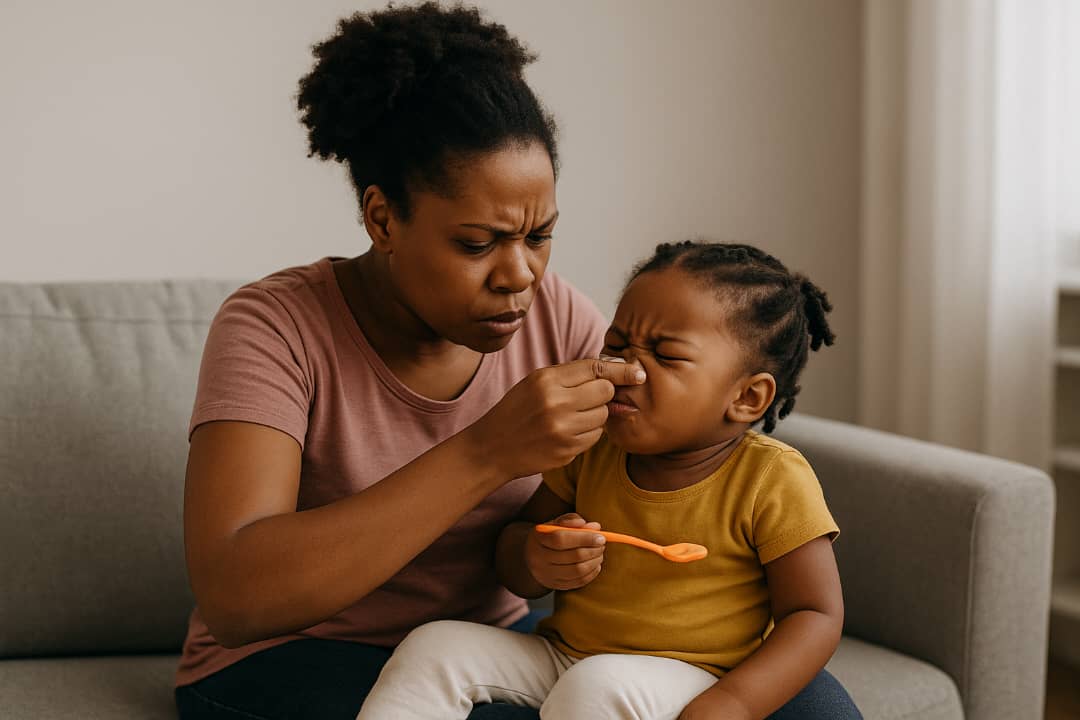
Force feeding is when a child is made to eat even when they don’t want to. Sometimes it’s by holding the nose to make the child swallow, other times it’s through threats, pressure, or pure frustration. It may look like a mother chasing her child around with a spoon, or a caregiver yelling at a toddler to finish what’s on their plate. It’s often done with love, or at least with good intentions, but that doesn’t make it okay.
Why Parents Do It
Most parents force feed out of worry. They’re afraid the child isn’t eating enough. They’re scared of malnutrition, stunted growth, or even being judged by others.
In some homes, a child finishing their food is seen as a sign of a responsible mother. So when a child refuses to eat, it’s taken personally. It becomes a fight, a power struggle, and in trying to win, we forget that children are humans too, with real hunger cues, real preferences, and real limits.
The Real Dangers of Force Feeding
Force feeding is more harmful than most people think. Apart from the emotional toll, it puts the child at physical risk.
When a baby is forced to eat, especially solid foods too early, the food can go into the wrong pipe and block the airways. This can lead to choking, aspiration, and even death.
Force feeding also damages a child’s relationship with food. They grow up to either fear food, resent it, or overeat because they were never taught to listen to their own body. And when eating becomes stressful, it stops being nourishing.
There Are Better Ways
Every child is different. Some are picky, some eat slowly, some don’t like certain textures or smells, and that’s okay.
As parents, our role is to guide, not to control. We can offer a variety of healthy foods and let them choose, create calm mealtimes, free from shouting or stress, and trust that if a child is truly hungry, they will eat.
And if they refuse food repeatedly, we can speak to a doctor or a child nutritionist instead of forcing it down their throat.
Breaking the Cycle
Yes, our mothers did it, and many of us turned out fine. But not everyone was blessed with the same outcome. Some carry hidden traumas around food, others developed eating disorders, while some lost their lives. So let’s not romanticise it, we have to be honest about what didn’t work and be brave enough to change it.
Gentle parenting doesn’t mean you’re weak, it means you’re wise. It means you’re choosing understanding over fear, and connection over control.
In Conclusion
Feeding your child should be a moment of love, not fear. It should be about trust, not pressure.
When you force feed, you may win a short-term battle, but you lose a long-term connection. So let’s learn, unlearn, and do better for the sake of our children. Because food should never be the reason a child feels unsafe, and certainly not the reason a child loses their life.