
We probably don’t think much about seasoning cubes. We buy them, unwrap them and drop them into the pot almost without thinking. They’ve become such a normal part of everyday cooking that it’s hard to imagine making stew, soup or jollof rice without them.
But that tiny cube has a story. It wasn’t created for African food, yet today it is so deeply woven into the way we cook that leaving it out can make a meal feel as though something is missing. And that is perhaps the more interesting conversation, not whether seasoning cubes are “good” or “bad”, but how something invented as a shortcut became something many of us now struggle to cook without.
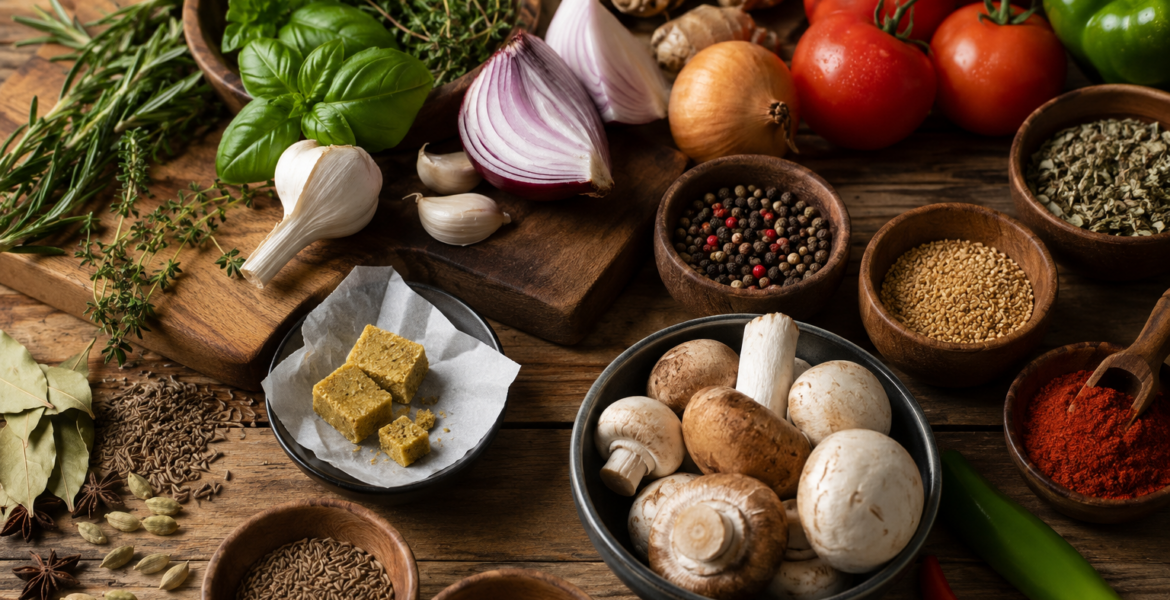
Because our kitchens have changed enormously. We have access to more ingredients than ever: rosemary and thyme, cumin and sesame seeds, fresh basil and curry leaves, garlic and ginger, smoked paprika, mushrooms, spring onions, celery, parsley and countless spice blends. Alongside them are ingredients our mothers and grandmothers already knew—crayfish, smoked fish, iru, ogiri, peppers and properly made stock. There has probably never been a better time to experiment with flavor.
So perhaps it is worth going back to the beginning. Not to romanticize how people cooked in the past, but to understand how the seasoning cube became so important in the first place, and whether we have more choices today than we realize.
First, How Did a Little Cube Become Such a Big Deal?
The seasoning cube was born from a very modern idea: make cooking easier.
People had been concentrating stocks and Seasoning Cubes Are in Almost Every Kitchen. But Do We Really Need Them? broths for centuries, but industrial food production changed what was possible. By the late nineteenth and early twentieth centuries, European manufacturers were experimenting with ways of producing the rich, savory character of broth in a form that was inexpensive, portable and could sit on a shelf.
Swiss food manufacturer Julius Maggi was one of the important names in that story. His company had already been developing quick, affordable foods for working families when it introduced its bouillon cube commercially in 1908. OXO introduced a cube in 1910, while Knorr was developing similar products around the same period.
And you can understand immediately why people loved the idea.
You didn’t need to prepare stock. You didn’t need hours. You didn’t even need very much meat. Drop a cube into hot food and you had an instant hit of saltiness and savory flavor.
That was the selling point then, and more than a century later, it remains the selling point now.
Then the Cube Met the African Kitchen
What is fascinating is that West African food did not need to be rescued from blandness.
We already understood flavor.
Fermentation was particularly important. Iru, also known as dawadawa in different parts of West Africa, ogiri, fermented fish and other intensely savory ingredients were being used long before commercial bouillon became commonplace. Smoking, drying, roasting and slow cooking created another layer of flavor, while crayfish, peppers, onions, herbs and local spices gave different dishes their identities.
Bouillon offered something those ingredients sometimes couldn’t: speed and extraordinary availability.
Food companies also became very good at making the cube feel at home. Instead of asking African consumers to cook European dishes, they marketed cubes for the food people were already eating. Jollof, soups, stews and rice dishes became part of the advertising. Products were adapted to local preferences and distributed so widely that eventually you could find a seasoning cube in places where some traditional fermented seasonings were becoming harder to find.
Then habit did the rest.
If you grew up watching cubes being crumbled into almost every pot, you probably didn’t think of them as a convenience product. They were simply part of the recipe.
And that brings us to the kitchen today.
Our Spice Racks Have Never Been More Interesting
This is the part I think we often overlook when talking about cooking without seasoning cubes. We make it sound like the alternative is a miserable plate of boiled vegetables with no flavor.
It isn’t.
Look at what is available to the average home cook today. Fresh rosemary can completely change roasted chicken or potatoes. Thyme works beautifully with meat, beans, soups and stews. Cumin seeds can be lightly toasted to release their warm, earthy aroma before being ground or added to a dish. Sesame seeds can be toasted for a deeper, nutty flavor and used in vegetables, sauces, rice dishes and salads.
Then there is fresh basil, parsley, coriander, spring onions, celery, curry leaves, bay leaves, turmeric, paprika, black pepper, garlic and ginger. Mushrooms bring natural savoriness. Lemon and lime can wake up flavors that seem flat. Fresh chillies give far more than heat when you begin experimenting with different varieties.
And we haven’t even touched the wealth of African ingredients already around us: scent leaf, uziza, uda, ehuru, iru, ogiri, crayfish, smoked fish and the enormous variety of fresh peppers available in our markets.
The better idea is to stop expecting one ingredient to create the entire flavor of a meal.
But Be Prepared: It May Taste Strange at First
This is the part nobody should pretend away. If you’ve cooked with seasoning cubes for twenty years and leave them out tomorrow, there is a good chance you’ll notice.
Your favorite soup may seem less intense. Your stew might feel as though it needs “something”. You may taste the pot repeatedly and eventually decide that this whole natural-seasoning experiment is not for you.
Give it time.
Our preference for saltiness is not completely fixed. Research suggests that when people move towards lower-sodium diets, the food can initially be less appealing, but preferences can gradually adjust; some studies have found that people eventually come to prefer lower levels of salt and may find their previous food excessively salty. The evidence doesn’t support a magical “taste-bud reset” on a particular day, however the adjustment varies.
And you don’t have to make the change dramatically. Research has also found that sodium can be reduced substantially in some foods without significantly reducing people’s acceptance of them.
So if you normally use four cubes, perhaps begin with three. Then two. At the same time, become more adventurous with everything else in your kitchen.
That’s when this stops feeling like deprivation, and starts feeling like discovery.
What to Reach for When You’re Not Reaching for a Cube
Rather than creating another rigid list of “healthy substitutes”, think about what your food is actually missing.
If it needs depth, homemade chicken, beef, fish or vegetable stock can help, as can mushrooms, crayfish, smoked fish or iru.
If it needs aroma, look towards rosemary, thyme, scent leaf, basil, curry leaves, parsley, bay leaves or spring onions.
If it feels flat, sometimes it isn’t salt you need at all. A squeeze of lemon or lime, a little acidity from tomatoes or the right fresh herb can completely change the way the other flavors register.
For warmth and spice, experiment with ginger, garlic, cumin, coriander seeds, black pepper, paprika, turmeric, chilli, uziza, uda or ehuru, depending on the dish you’re making.
For texture and nuttiness, toasted sesame seeds, sunflower seeds or other seeds and nuts can bring something entirely different to vegetables, salads, sauces and grain dishes.
And sometimes the answer isn’t another ingredient. It is another five or ten minutes on the stove. Browning, roasting, reducing and toasting can create flavors that simply weren’t there five minutes earlier.
This is where cooking becomes interesting again.
Maybe the Question Isn’t Whether You Should Stop
You don’t need this article to tell you to throw away your seasoning cubes. That decision belongs in your kitchen.
Perhaps you’ll continue using them but use fewer. Perhaps you’ll keep them for certain dishes and leave them out of others. Perhaps you’ll gradually stop altogether. Or maybe you’ll simply become more conscious of what else is available before automatically reaching for one.
What matters is knowing that you have options.
The seasoning cube became successful because it made cooking easier, and more than a century later it still does exactly that. But our kitchens today are overflowing with possibilities that cooks in 1908 could barely have imagined. We have traditional ingredients sitting beside spices from around the world, fresh herbs beside fermented seasonings, better access to recipes and an endless opportunity to experiment.
Maybe that is where the seasoning-cube conversation becomes interesting again.
Not in asking whether the cube is good or bad, but in remembering that it was always meant to be one way to create flavour, not the only way.
And if your first cube-free pot of stew doesn’t quite hit the spot, don’t give up on it. Your palate may need time, and your cooking may need a little experimenting too. Try another herb. Toast the cumin first. Add fresh thyme instead of dried. Make a proper stock. Rediscover iru. Roast your vegetables. Let the onions go a little longer.
There is an entire world of flavor beyond the familiar seasoning cube, and perhaps the greatest reward isn’t simply learning to cook without it, but discovering just how much your kitchen has been capable of all along.