
For years, rice has carried a bad reputation.
If you’re trying to lose weight, someone will probably tell you to stop eating rice. If you’re worried about belly fat, you’ll hear that rice is the first thing to remove from your plate. Scroll through social media and you’ll find countless videos blaming rice for weight gain, bloating and stubborn fat around the waist, especially in women.
It has become one of the most repeated pieces of nutrition advice online, yet very few people stop to ask an important question.
Is rice really the problem, or have we made one of the world’s oldest foods responsible for a much bigger issue?
After all, rice has been a staple food for billions of people for thousands of years. Entire countries have built their diets around it. Many of the world’s healthiest populations, particularly in parts of Asia, have eaten rice every day for generations. If rice alone caused belly fat, those populations should all be struggling with the same problem.
The truth is far more interesting than the internet would have us believe.
How Rice Became the Villain
Nutrition trends have a habit of looking for one food to blame.
Years ago, it was fat. People avoided eggs, butter and avocados because they believed dietary fat automatically made them fat. Then sugar became the enemy. More recently, carbohydrates have taken the spotlight, and rice has found itself at the center of that conversation.
The problem with this way of thinking is that our bodies don’t work in such simple ways. No single food has the power to determine whether we gain or lose weight. Weight gain happens over time when we consistently consume more energy than our bodies use, regardless of whether that energy comes from rice, bread, pastries, sugary drinks or oversized restaurant meals.
Rice is a carbohydrate, and carbohydrates are not the enemy. They are the body’s preferred source of energy. Your brain relies heavily on glucose to function, your muscles depend on it during physical activity, and many of the foods considered healthiest around the world—fruits, vegetables, beans and whole grains—contain carbohydrates too.
The question, therefore, isn’t whether rice contains carbohydrates. The question is how much we eat, how often we eat it and what else is on the plate.
Does Rice Actually Cause Belly Fat?
The short answer is no.
There is no scientific evidence showing that eating rice alone causes fat to collect around your stomach. Our bodies do not decide where to store fat based on a single food. Genetics, hormones, age, physical activity, sleep, stress and overall calorie intake all play a role in determining where fat is stored.
For women, this is especially important to understand. Hormonal changes during menstruation, pregnancy, childbirth and menopause can all influence fat distribution around the abdomen. Blaming rice alone ignores a much bigger picture.
What rice can do, however, is make it easier to consume more calories than we realize. White rice is easy to eat in large portions, especially when served with calorie-dense stews, fried foods or sugary drinks. It is often the entire meal—not the rice by itself—that pushes calorie intake beyond what the body needs.
In other words, the rice is usually sitting beside the real problem rather than being the problem itself.
Not All Rice Is the Same
This is where the conversation becomes more interesting.
Although all rice provides carbohydrates, different types of rice affect the body differently. Brown rice, for example, is a whole grain that still contains its bran and germ. Because of its higher fibre content, it is digested more slowly, helping many people feel fuller for longer and producing a gentler rise in blood sugar than white rice. Studies have also linked higher brown rice consumption with a lower risk of type 2 diabetes compared with high intakes of white rice.
That doesn’t mean white rice is unhealthy. It simply means that brown rice offers additional fibre and nutrients that white rice loses during processing. White rice can still be part of a healthy diet, especially when portion sizes are sensible and it is paired with vegetables, lean protein and healthy fats.
Healthy eating has never been about finding one perfect food. It has always been about balance.
Why Rice Feels So Filling—Then Leaves You Hungry
Have you ever noticed that a large plate of white rice can leave you feeling full at lunchtime, only for you to feel hungry again a few hours later?
That happens because white rice is digested relatively quickly. On its own, it can raise blood sugar faster than foods containing more fibre. As blood sugar rises and later falls, hunger often returns sooner.
This doesn’t mean you should stop eating rice. It simply means rice works better as part of a balanced meal than as the meal itself.
Adding vegetables, beans, fish, eggs, chicken or other sources of protein slows digestion and makes the meal more satisfying. Healthy fats such as avocado, nuts or seeds can also help improve satiety while adding important nutrients.
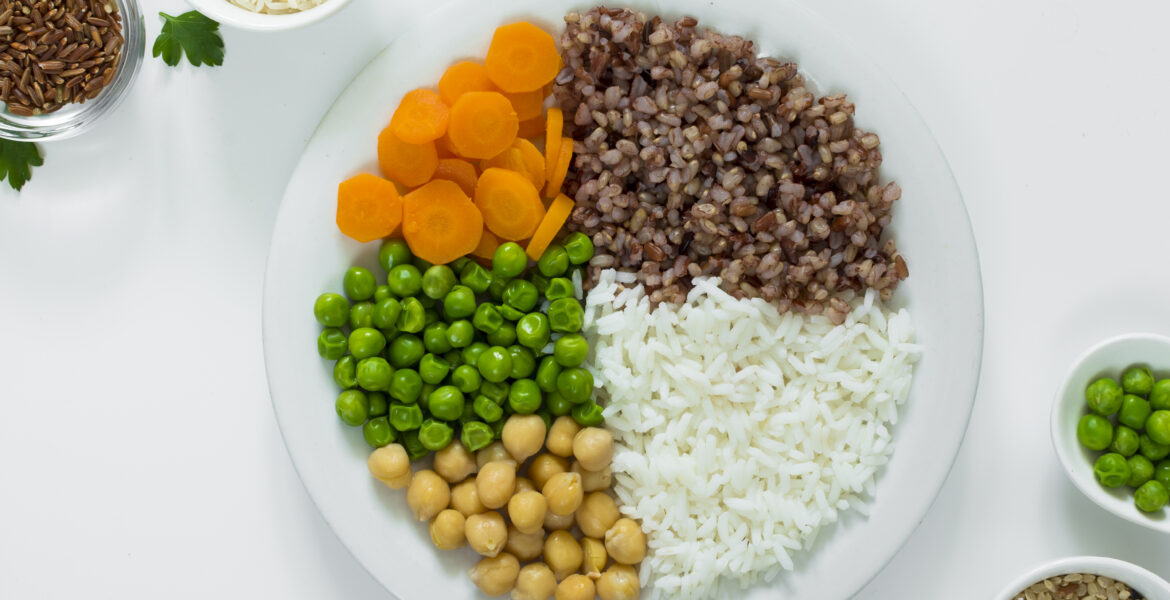
A plate that is half vegetables, one-quarter protein and one-quarter rice will usually keep you satisfied much longer than a plate dominated almost entirely by rice.
Should You Stop Eating Rice?
For most people, the answer is no.
Eliminating rice may help some people reduce calories temporarily, but that does not make rice unhealthy. In fact, cutting out foods you genuinely enjoy often makes healthy eating harder to maintain. Many people avoid rice for a few weeks only to return to it later because the diet simply wasn’t realistic.
A healthier approach is to rethink your relationship with rice rather than fear it.
Pay attention to portion sizes. Include vegetables with every meal. Add a good source of protein. Choose brown rice or other whole grains when they suit your taste, but don’t feel guilty if you occasionally enjoy white rice. Most importantly, remember that your health is shaped by what you eat consistently over months and years, not by a single bowl of rice.
The Bigger Conversation
It’s easy to blame one food because it gives us a simple answer, but our bodies don’t work that way. One bowl of rice won’t make you gain weight, just as one bowl of salad won’t make you healthy. What matters is what we do consistently over time.
That means we don’t have to avoid rice simply because it is a carbohydrate. We can enjoy it in sensible portions, alongside other foods that make up a balanced meal, without treating it as something we need to completely remove from our diet.
So the next time rice finds its way onto your plate, perhaps the better question isn’t, “Will this make me gain belly fat?” but “Does the way I eat as a whole support the kind of health I want?”